Goats through the Ages
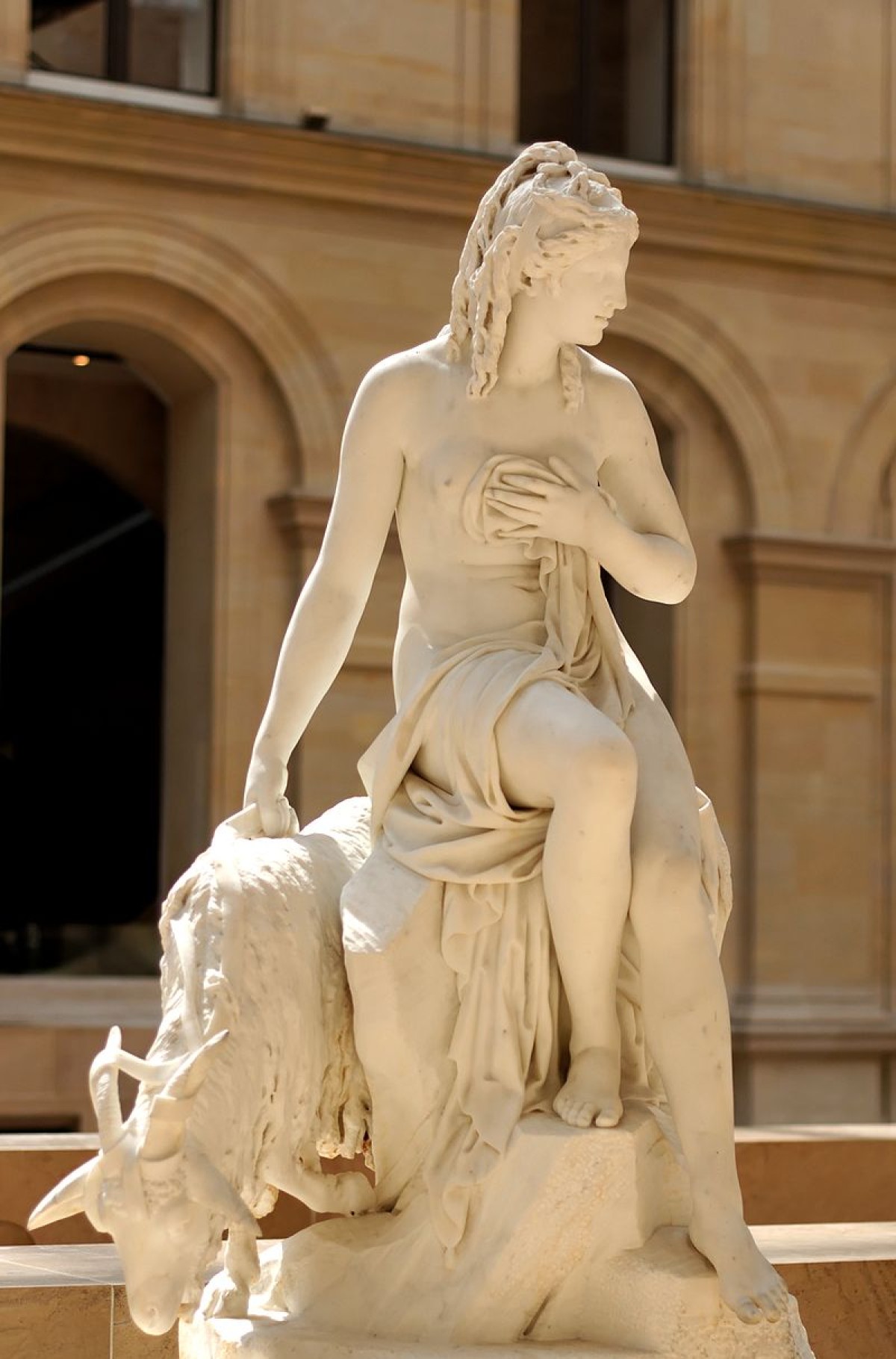
In classical myth, Amalthea is either a nymph who fed the infant god Jupiter with goat's milk, or the goat who suckled the infant. In another legend, the god broke one of the goat's horns, endowing it with the power to fill itself with whatever its owner wanted, making it the cornucopia or horn of plenty. The ancient city of Ebla in Syria contains a tomb with a throne decorated with bronze goat heads, now called "The Tomb of the Lord of the Goats".
In Norse mythology, the god of thunder, Thor, has a chariot that is pulled by the goats Tanngrisnir and Tanngnjóstr At night when he sets up camp, Thor eats the meat of the goats, but takes care that all bones remain whole. Then he wraps the remains up, and in the morning, the goats always come back to life to pull the chariot. When a farmer's son who is invited to share the meal breaks one of the goats' leg bones to suck the marrow, the animal's leg remains broken in the morning, and the boy is forced to serve Thor as a servant to compensate for the damage. Possibly related, the Yule goat (Julbocken) is a Scandinavian Christmas tradition. It originally denoted the goat that was slaughtered around Yule, now more often a goat figure made out of straw. It is used for the custom of going door-to-door singing carols and getting food and drinks in return, often fruit, cakes and sweets. The Gävle goat is a giant version of the yule goat, erected every year in the Swedish city of Gävle. In Finland the tradition of Nuutinpäivä—St. Knut's Day, January 13—involves young men dressed as goats (Finnish: Nuuttipukki) who visit houses. Usually the dress was an inverted fur jacket, a leather or birch bark mask, and horns. Unlike the analogous Santa Claus, Nuuttipukki was a scary character (cf. Krampus). The men dressed as Nuuttipukki wandered from house to house, came in, and typically demanded food from the household and especially leftover alcohol. In Finland the Nuuttipukki tradition is kept alive in areas of Satakunta, Southwest Finland and Ostrobothnia. Nowadays the character is usually played by children and involves a happy encounter.
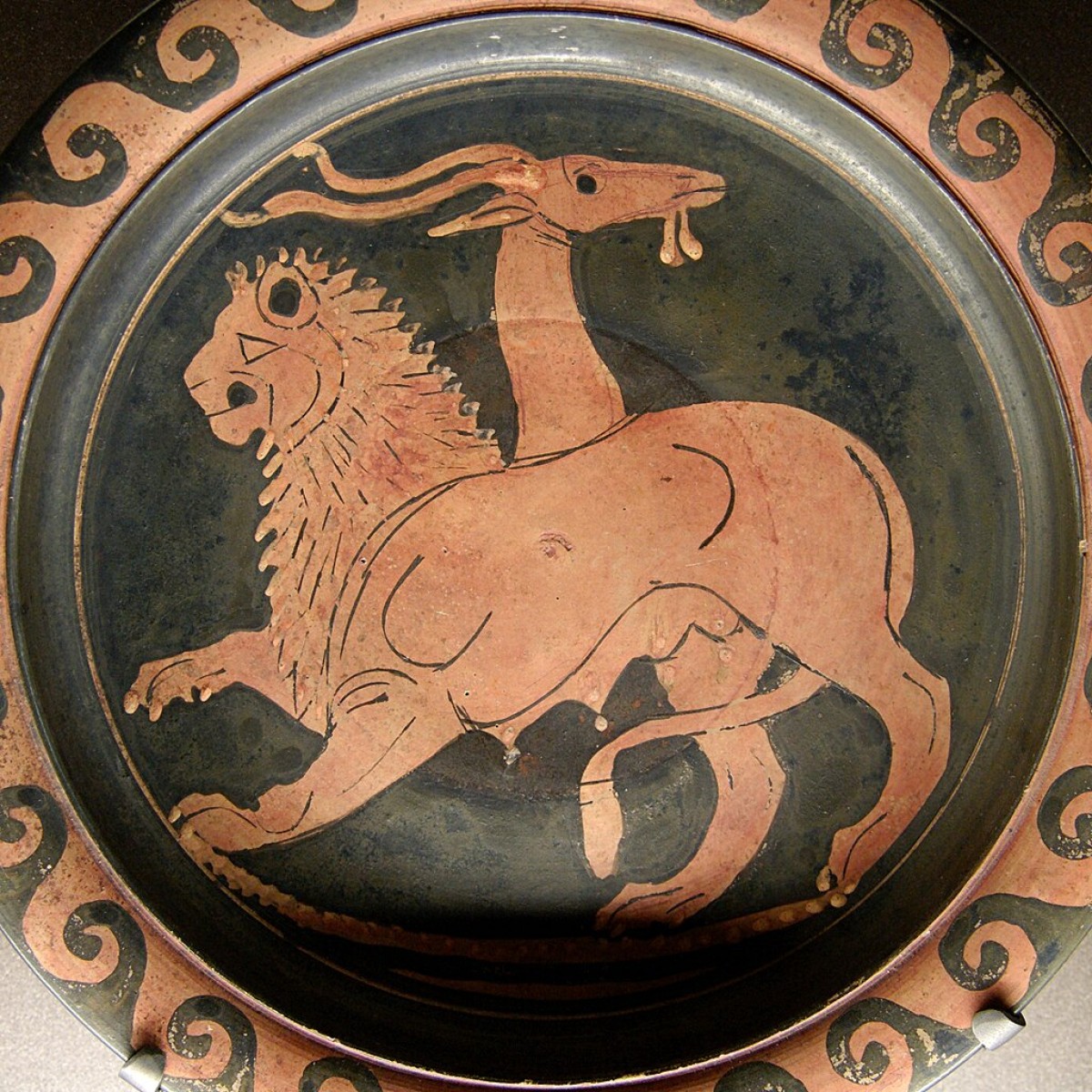
The goat is one of the 12-year cycle of animals which appear in the Chinese zodiac. Several mythological hybrid creatures contain goat parts, including the Chimera. The Capricorn constellation sign in the Western zodiac is usually depicted as a goat with a fish's tail. Fauns and satyrs are mythological creatures with human bodies and goats' legs. The lustful Greek god Pan similarly has the upper body of a man and the horns and lower body of a goat.
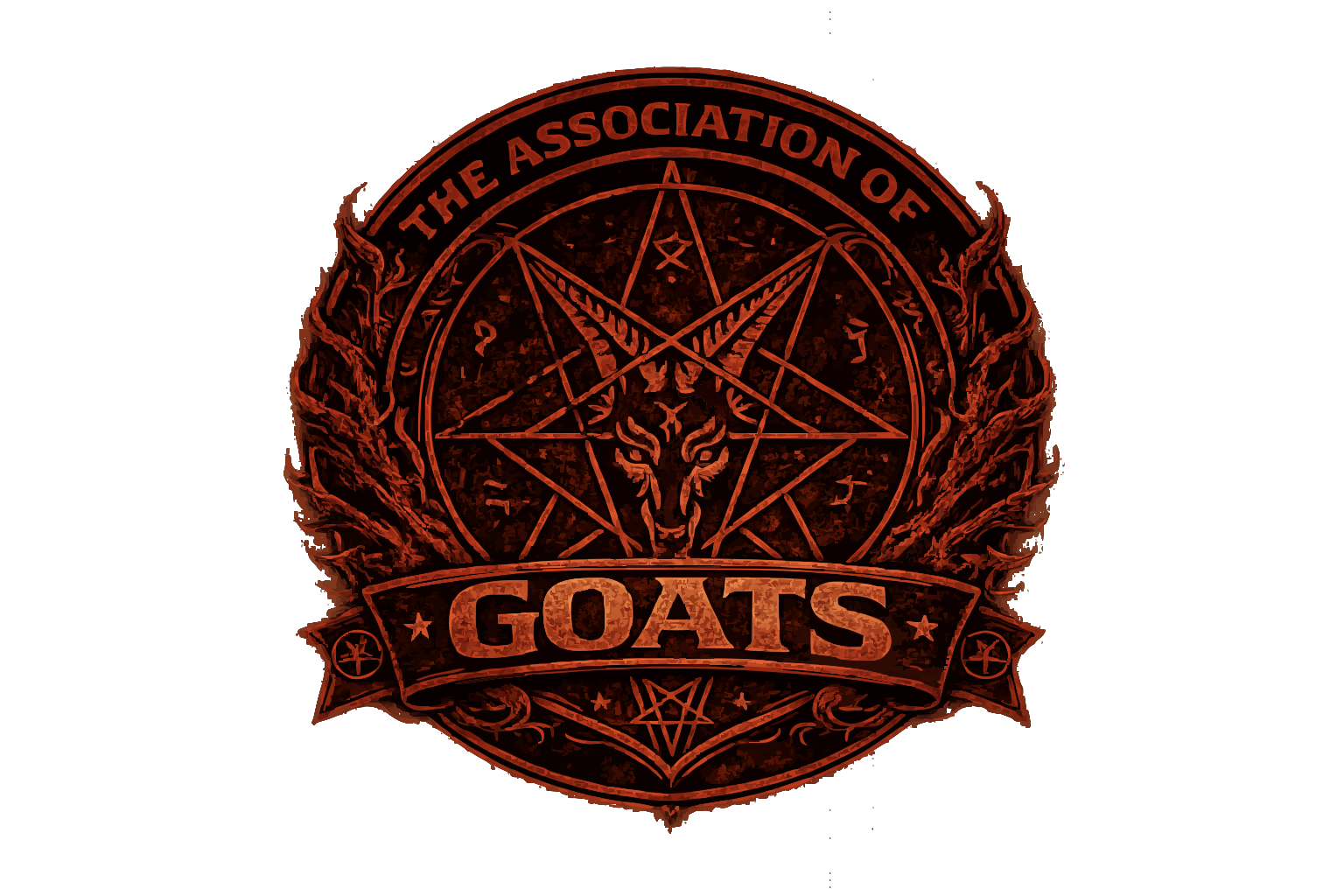
In Hinduism, Daksha, one of the prajapati, is sometimes depicted with the head of a male goat. A legend states that Daksha failed to invite Shiva to a sacrifice; Shiva beheaded Daksha, but when asked by Vishnu, restored Daksha to life with the head of a goat. Goats are mentioned many times in the Bible. Their importance in ancient Israel is indicated by the seven different Hebrew and three Greek terms used in the Bible. A goat is considered a "clean" animal by Jewish dietary laws and a kid was slaughtered for an honored guest. It was also acceptable for some kinds of sacrifices. Goat-hair curtains were used in the tent that contained the tabernacle (Exodus 25:4). Its horns can be used instead of sheep's horn to make a shofar. On Yom Kippur, the festival of the Day of Atonement, two goats were chosen and lots were drawn for them. One was sacrificed and the other allowed to escape into the wilderness, symbolically carrying with it the sins of the community. From this comes the word "scapegoat".[citation needed] The devil is sometimes depicted, like Baphomet, as a goat, making the animal a significant symbol throughout Satanism. The inverted pentagram of Satanism is sometimes depicted with a goat's head of Baphomet, which originated from the Church of Satan.